 ";
document.write(scriptNSBody);
}
";
document.write(scriptNSBody);
}
Asthama |
|
|---|---|
POWER POINTS
|
|
What is asthama? |
|
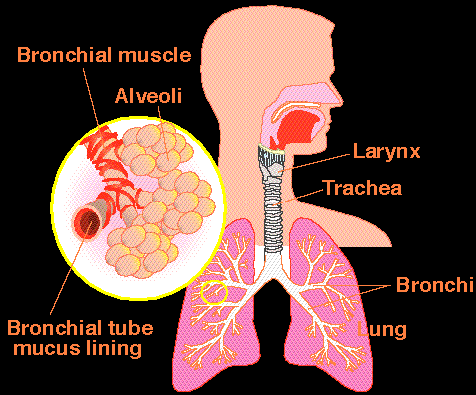
Asthma is a breathing problem which results from spasm (bronchospasm) of the muscles surrounding the walls of the lung airways (bronchi). Airways are breathing passages that allow air to move in and out of the lungs. Alveoli are tiny sac-like stuctures at the end of the airways where oxygen enters the bloodstream. Bronchospasm causes narrowing of the airways which leads to shortness of breath, wheezing, coughing, and congestion. Airways can also be narrowed in asthma from accumulated mucus and swelling that is caused by inflammation of the bronchi. Asthma is usually a reversible condition. The narrowing of the airways caused by bronchospasm can improve spontaneously or in response to medications. Conversely, in other lung diseases, such as emphysema or chronic bronchitis, breathing impairment can be irreversible because of scarring and destruction of lung tissue. |
 |
What causes Asthama? |
|
The cause of asthma is unknown. Asthma is generally classified according to the factors that can precipitate an attack of asthma. These factors include allergies, drugs, pregnancy, molds, cold air, exercise, cigarette smoke, chemical fumes, gastroesophageal reflux, and infections. |
|
What are the symptoms of Asthama? |
|
Asthma attacks are typically episodic. Intervals between attacks can be days, months, or years. In some individuals, asthma can become a daily problem. Symptoms of asthma vary, and are related to the severity of the airway obstruction. Common symptoms include wheezing, coughing, chest tightness, and shortness of breath during attacks. In more severe cases, patients tend to lean forward, bracing their arms on their knees in order to maximize air movement. They may only be able to speak in one or two word sentences. If severe airway obstruction interferes with the delivery of oxygen to the brain, patients can become restless and confused. |
|
How is Asthama diagnosed? |
|
Diagnosis of asthma is generally not difficult. Asthma is considered when patients have breathing problems that come and go. Wheezing during attacks is a helpful clue to the diagnosis. Breathing tests, such as spirometry, are available to measure the airflow across the airways during normal periods, during attacks, and immediately following inhalation of medications that dilate the airways. Chest x-rays are usually normal. In some patients, allergy cells (eosinophils) are found in the blood and sputum. Finally, rapid improvement in breathing in response to asthma medications suggests asthma. |
|
How is Asthama treated? |
|
Avoidance of known allergenic substances, if possible. This also applies to other irritants like dust, and smoke. There is evidence that psychic factors play an breathing role in aggravation of asthma. Yoga recommends breathing exercises along with other techniques to promote tranquility of the mind. As medical treatment, bronchodilators (tablets or aerosols) and/or corticosteroids are commonly used. |
|
