 ";
document.write(scriptNSBody);
}
";
document.write(scriptNSBody);
}
 |
 |
|
|
|
EVERY EVENING AT WAHGA, a small town on the India-Pakistan border, a belligerent military exercise takes place. Strapping Indian and Pakistani soldiers goose-march toward each other and, amid much foot-stamping and mutual glaring, lower their national flags. Then, as crowds of people on both sides gaze forlornly at each other, the troops shut the gates leading to their respective nations. This daily ritual has underscored the fate of Indians and Pakistanis for 51 years: two peoples with a common heritage unable to meet freely. | |
 |
|
|
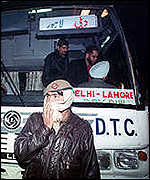
But on Feb. 20, amid much media attention, Indian Prime Minister Atal Behari Vajpayee and a group of 22 eminent Indians rode into Wahga in a bus named Sada-e-Sarhad ("Call of the Border"). The event marked the maiden journey of the first direct bus service between India and Pakistan since Independence in 1947. The New Delhi-Lahore route will operate three times a week. Previously, a single train service was the only mode of land travel between the two nations. |
|
|
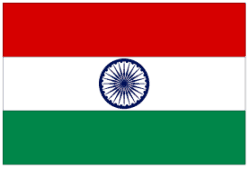
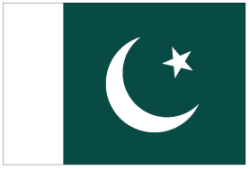
In Wahga, Pakistan Prime Minister Nawaz Sharif, his aides and some 400 journalists stood waiting as the massive metal gates flew open and let in a sleek, gold-colored bus. Painted on its side were the two countries' flags, shown merging (the illustrative motif used in this story). Vajpayee, dressed in a white sarong and a sleeveless black coat, slowly alighted from the vehicle and became the first Indian PM in 10 years to step onto Pakistani soil. In a brief arrival statement, he called the occasion "a defining moment in South Asian history" and expressed hopes for improved relations between the two neighbors. Said Sharif: "The ice has broken." |
|
| Next | |