 ";
if(agentInfo1 >= "Netscape 4.0")
document.write(scriptNS);
else if(agentInfo2 >= "Microsoft Internet Explorer 4.0")
document.write(scriptIE);
";
if(agentInfo1 >= "Netscape 4.0")
document.write(scriptNS);
else if(agentInfo2 >= "Microsoft Internet Explorer 4.0")
document.write(scriptIE);
 Enroute to one of India's oldest pilgrimage
Mahakaal at Ujjain on river Kshipra, and to Omkareshwar on the river Narmada and onwards
to Rameshwaram, Indore is a convenient resting place. Recently the remains of a Buddhist Stupa were discovered in excavations in the eastern suburbs
of Indore, taking its history to the early Christian era. Earlier a part of the Mauryan
and Gupta empires, it later formed a part of the flourishing Paramour kingdom of Malwa and
the sultanate of Mandu. Enroute to one of India's oldest pilgrimage
Mahakaal at Ujjain on river Kshipra, and to Omkareshwar on the river Narmada and onwards
to Rameshwaram, Indore is a convenient resting place. Recently the remains of a Buddhist Stupa were discovered in excavations in the eastern suburbs
of Indore, taking its history to the early Christian era. Earlier a part of the Mauryan
and Gupta empires, it later formed a part of the flourishing Paramour kingdom of Malwa and
the sultanate of Mandu.Shivaji once passed through Indore while
escaping the Mugals from Agra. After the break up of Mugal empire, Malwa became an open
gateway for the Maratha armies to North India. Their army transit camps here attracted the
local Zamindars (landlords) who, drawn by the promise of lucrative trade, settled in the
villages on the confluence of the Khan and Saraswati rivers, thereby laying the foundation
of this commerce centre in 1715. In 1741, Temple of Indreshwar was
erected in the town, from which it derives its name Indore. |
|
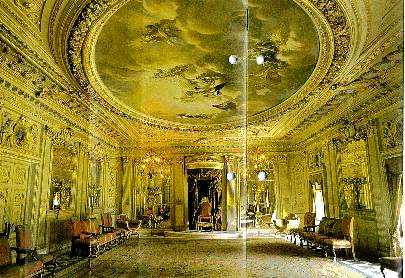 The history of Indore is
inseparable from the history of Holkar state. The founder of the House of Holkars was
Malhar Rao Holkar, born in 1693. His soldierly qualities brought him to the forefront
under the Peshawa and he was rewarded with the gift of territories comprising the Indore
region. The history of Indore is
inseparable from the history of Holkar state. The founder of the House of Holkars was
Malhar Rao Holkar, born in 1693. His soldierly qualities brought him to the forefront
under the Peshawa and he was rewarded with the gift of territories comprising the Indore
region. Malhar Rao was succeeded by his grandson, on whose death without issue, his mother, Maharani Devi Ahilya Bai ascended the throne. Ahilya Bai contributed vastly to the heritage of India by establishing several religious edificies remarkable in architecture. The Kashi Vishwanath Temple at Varanasi being notable among them. At Badrinath, Rameshwaram she built Dharamshalas, at Dwarka, Jagganathpuri, Omkareshwar and Ujjain she established Annachatras ( where food is distributed to mendicants ). She also established charitable institutes at Gaya, Varanasi, Allahabad, Ayodhaya, Haridwar and Pandharpur. She died at Maheshwar where a large mousoleum stands in her memory. The trade centre grew rapidly under the Holkar dynasty (1733-1818). The remains of their two century old palace still stand in the main square (called Rajwada). Though Ahilya Bai loved Indore immensely, it was only after her death, the state capital was shifted from Maheshwar to Indore in 1811.The city became the capital of the Indore princely state in 1818 after the British forces under Sir John Malcolm defeated the Holkars led by Rani Krishnabai Holkar at Mahidpur. She signed the treaty of Mandsaur by which the control of Indore went in the hand of the East India Company. Last four Holkar rulers are often called the Makers of Modern Indore. Tukoji Rao II (1844-1886) installed the first railway line from Khandwa to
Indore at the cost of 1 crore. He also built M.T.H. Hospital, Kila(now a Girls
Degree College). Shiv Vilas Palace and began construction of Lal Baug
Palace. Shivaji Rao Holkar (1886-1903) was specially known for his love of
buildings. Among the many to his credit is the Holkar Science College, now more than 100
years old. Between 1948 and 1956, Indore served as the summer capital of the former Madhya Bharat state. Currently, it is the commercial capital of M.P.
|
